
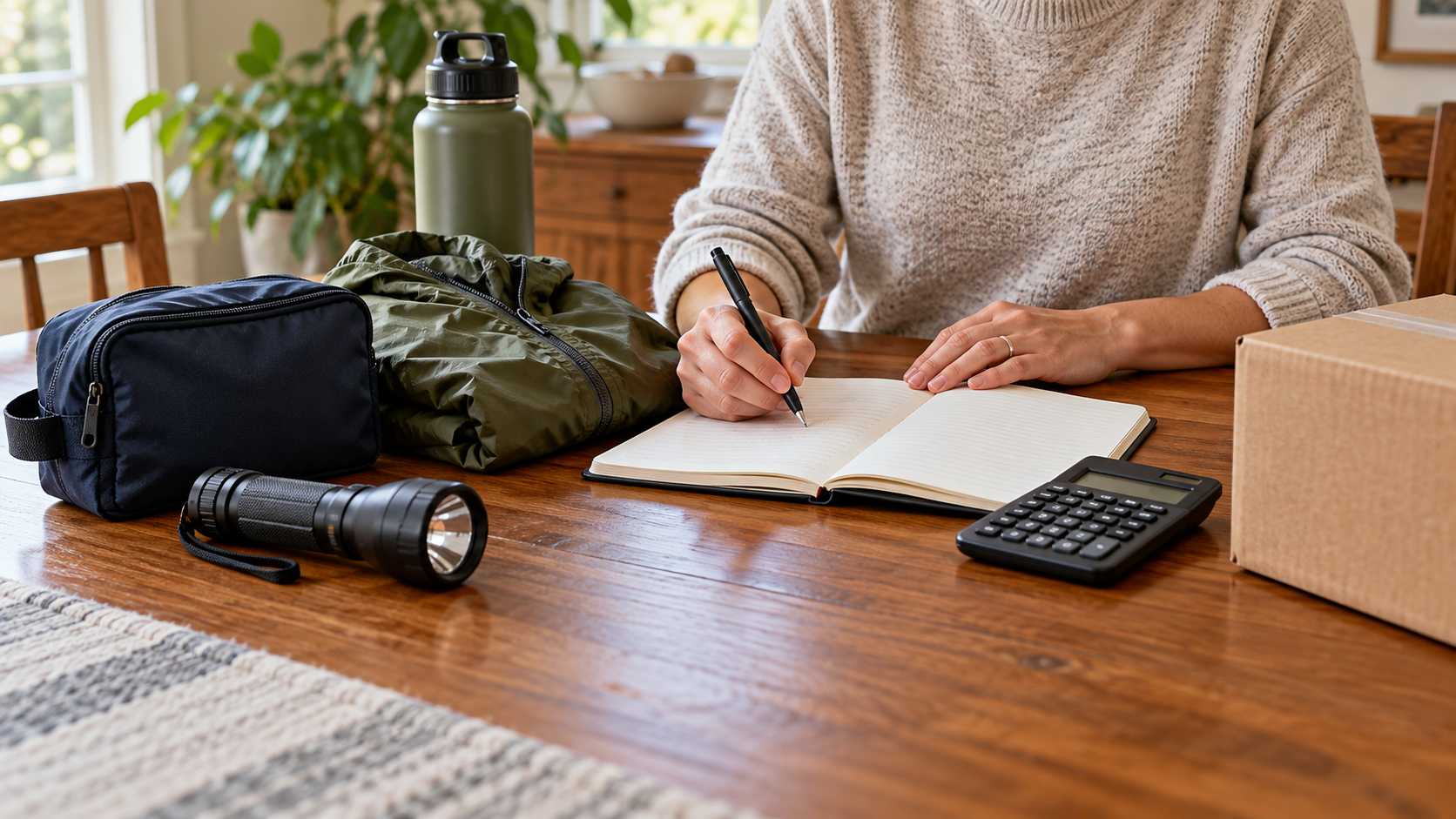
The product looks convincing: a rugged case, several operating modes, and a description that makes it sound indispensable.
But once it arrives, it needs another cable. It is awkward to store. The person expected to use it cannot remember the controls.
The purchase added equipment without clearly improving the plan.
Building an emergency kit on a budget starts with choosing what solves a real household need. Price matters, but so do compatibility, suitable storage, accessibility, and the work required to maintain the item.

Before opening another shopping tab, write down what the purchase is meant to accomplish.
Describe the Missing Capability
“We need a better flashlight” leaves the buying decision wide open.
“We need a light that the intended user can retrieve and operate from the bedroom” gives you something to evaluate.
Name the task, the person, and the circumstances. The same approach works for accessing contact information, keeping suitable clothing available, or arranging personal supplies at work.
If the problem is unclear, pause the purchase and investigate. You may need a different location or an agreed household arrangement rather than another product.
Check What You Already Own
Review existing equipment before deciding there is a gap.
Does an appropriate item already serve the task? Is it unavailable because someone borrowed it, its accessory is missing, or its storage location is inconvenient?
Follow its instructions for condition and suitability checks. Do not assume an old product is usable simply because it turns on, or that a familiar container meets a new storage need.
If existing equipment is suitable, restoring its complete setup may solve the problem. If it is not, record why. That explanation becomes a requirement for any replacement.
Define Enough Before Comparing Extras
Choose a short list of requirements directly connected to the task.
For a personal light, relevant questions might include whether the intended user can operate it, whether its power arrangement fits the plan, and whether it can be stored appropriately.
For a bag, the questions may concern fit, access, capacity, and manageable carrying arrangements.
Keep requirements separate from appealing extras. Additional modes, accessories, and compartments are useful only when they support the job you have identified.
Do not substitute appearance for evidence. Check the manufacturer’s documentation for capabilities, limitations, compatibility, and required care.
Include What the Item Needs Around It
The purchase price may not represent everything required to put the equipment into service.
Identify necessary compatible accessories, suitable storage, replacement supplies, installation, or instruction. Confirm what is included rather than assuming the product photographs show the contents of the package.
Some tasks require qualified help or training. Include that requirement in the decision instead of treating ownership as competence.
You do not need a complicated financial model. A short list of dependencies can reveal whether a purchase is more involved than it first appears.
Ask Who Will Use and Maintain It
A device can be well made and still be a poor fit for its intended user.
Consider controls, grip, readability, portability, and assistance needs. Where possible and appropriate, assess those features before purchase through a legitimate demonstration or reliable product information.
Then identify who will handle inspection, care, charging, and replacement under the manufacturer’s directions.
If the maintenance plan is “someone will remember,” it needs more work. Additional equipment adds responsibility as well as capability.
Use a Buy-or-Skip Worksheet
| Question | Answer before purchasing |
|---|---|
| What task does this solve? | State the need in one sentence |
| Who will use it? | Identify the user and relevant requirements |
| What already covers the task? | Note existing equipment or arrangements |
| What must the product do? | List essential requirements |
| What else does it require? | Accessories, storage, instruction, or installation |
| What supports the claims? | Relevant manufacturer documentation or trustworthy evidence |
| Who maintains it? | Name the responsible person and instructions to follow |
| What remains uncertain? | Record unanswered questions |
The worksheet is an editorial decision aid, not a product endorsement or readiness certification. An answer in every row does not prove that equipment is safe or suitable.
Give the Decision a Clear Outcome
You do not have to choose between buying immediately and rejecting the idea forever.
Use one of four plain outcomes:
- Use what we have: Suitable existing equipment already covers the task.
- Resolve an arrangement: Placement, responsibility, or access needs attention.
- Research further: A meaningful requirement or claim remains unverified.
- Purchase for a defined need: The item fits a real requirement and its dependencies have been considered.
Avoid treating “research further” as a failure. An unanswered compatibility question is a useful reason to pause.
Keep Priorities Connected to the Household
A budget creates choices about timing, but a generic shopping article cannot determine every household’s essential needs.
Use appropriate official guidance for local hazards and obtain individual advice for specialized requirements. Do not remove necessary care supplies, water arrangements, or other essential provisions merely to make an equipment list look cheaper.
Where an important need remains unresolved, make the limitation explicit and investigate suitable assistance or alternatives.
Buying a novelty accessory is easier than resolving some planning questions. Keep the actual need in view.
Recheck the Purchase When It Arrives
Confirm that the delivered item matches the description and includes the expected components. Read the instructions before ordinary use and follow the applicable setup requirements.
Check whether the intended user can perform the planned task safely and appropriately. Keep the packaging and records needed under the seller’s actual return terms while making that assessment.
If it is unsuitable, address the issue through the relevant seller or manufacturer process rather than forcing it into the kit because money has already been spent.
Update the inventory only after deciding what role it actually serves.
Make the Next Purchase Specific
Before buying, finish this sentence: “This item will help this person do this task, and we have checked what it needs to work.”
If you cannot finish it clearly, keep investigating.
A useful emergency kit grows through deliberate choices. Sometimes the best next step is equipment; sometimes it is returning a missing cable, moving a light, or agreeing who handles an important task. Choose the improvement that addresses the gap you actually have.